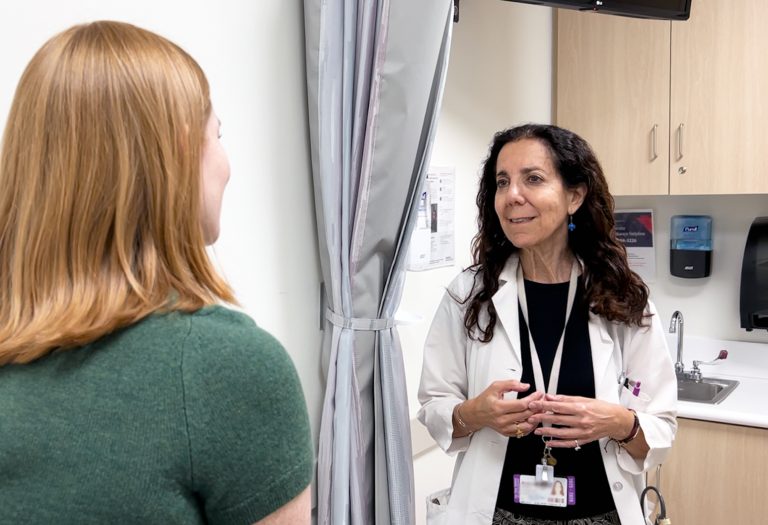
Systemic lupus erythematosus (SLE) is a chronic autoimmune disease that causes painful inflammation throughout the body. Cynthia Aranow, MD, professor in the Institute of Molecular Medicine, Lupus Center of Excellence at The Feinstein Institutes for Medical Research, is leading a novel clinical trial, the Vagus Nerve Stimulation Trial, studying the therapeutic potential of non-invasive vagus nerve stimulation (VNS) to curb lupus-related pain and fatigue.
The Importance of the Vagus Nerve Stimulation Trial in Treating Lupus
Study participants receive daily, brief stimulation to the vagus nerve for a period of 28 days as part of the Vagus Nerve Stimulation Trial. The study evaluates changes in pain levels and fatigue and explores how this type of stimulation might work to reduce these symptoms. Participants are monitored for an additional 28 days after the stimulation period to assess the treatment’s lasting effects. Researchers monitor blood biomarkers and the effects of stimulation on the gut microbiome and function, including its impact on intestinal permeability (leaky gut), which is linked to the vagus nerve, also known as the gut-brain axis. The trial is now 50 percent enrolled. Those interested in participating can email Dr. Aranow here.
This study, the Vagus Nerve Stimulation Trial, which is part of Northwell Health’s Center for Bioelectronic Medicine, builds upon Dr. Aranow’s previous clinical trial, which showed dramatic results for using transcutaneous (over the skin) VNS to reduce pain and fatigue in lupus patients. The trial is supported by the Lupus Research Alliance (LRA) inaugural Translational Bridge Award for $450,000 over two years.
“The quality of life for my patients with lupus is negatively affected by their joint and muscle pain, as well as their fatigue,” says Dr. Aranow. “We’ve seen that vagus nerve stimulation reduces pain and fatigue, which is why I’m grateful to continue studying this innovative approach that has potential to improve patients’ lives. We hope this research will move bioelectronic medicine therapy closer to patients who urgently need new and safe treatment options.”
Dr. Aranow’s VNS research adds to the growing number of clinical trials being offered at the Feinstein Institutes in the field of bioelectronic medicine including those looking at VNS to treat inflammatory bowel disease in children and adults, post-traumatic stress disorder, and hemorrhaging and bleeding disorders, among others.
“Bioelectronic medicine offers the promising potential to treat many debilitating and painful autoimmune and inflammatory diseases,” says Kevin J. Tracey, MD, president and CEO of the Feinstein Institutes and Karches Family Distinguished Chair in Medical Research. “Dr. Aranow’s new clinical trial is a much-needed next step to explore how vagus nerve stimulation may relieve the symptoms of lupus.”
The Feinstein Institutes for Medical Research is the global scientific leader in bioelectronic medicine and vagus nerve stimulation, where medical researchers use modern technology to develop new device-based therapies to treat disease and injury. Built on decades of research, the field of bioelectronic medicine integrates insights from neuroscience, molecular medicine, and biomedical engineering, and researchers at the Feinstein Institutes leverage the connection between the brain and the immune system to develop bioelectronic medicine interventions.
The discovery that initiated the field of bioelectronic medicine – called the “inflammatory reflex” – was made more than thirty years ago by Dr. Tracey. This discovery emerged from studies on vagus nerve signaling and showed that the brain and body communicate to regulate inflammation and, if uncontrolled, inflammation could lead to disease. New knowledge then sparked extensive research and clinical trials, which led to the first FDA-approved vagus nerve stimulation device in July 2025 to treat rheumatoid arthritis; Northwell Health was the first in the nation to implant the newly approved treatment in patients in August 2025.
Today, engineers, computer scientists, immunologists, neuroscientists, and clinicians develop cutting-edge medicine, including neuroimmune modulation, miniature implants for stimulating and recording the vagus nerve, noninvasive ultrasound neuromodulation to suppress inflammation, and novel brain-computer interfaces to overcome injuries of the nervous system. These collaborative efforts converge to create personalized, precise treatments that hold promise in treating acute and chronic diseases, often with fewer side effects compared to current therapies.
These treatments have the potential to enhance or replace existing treatments across a range of conditions such as arthritis, heart disease, inflammatory bowel diseases, diabetes, cancer, and autoimmune disorders. By producing bioelectronic medicine knowledge, disease and injury could one day be treated by our own nerves without costly and potentially harmful pharmaceuticals.
If you are interested in learning more about the Center for Bioelectronic Medicine and current bioelectronic clinical trials offered at Northwell Health, click here or call 1-227-BIO-INST (246-4678). If you are interested in learning more about lupus clinical trials, call 1-833-33LUPUS (1-833-335-8787).