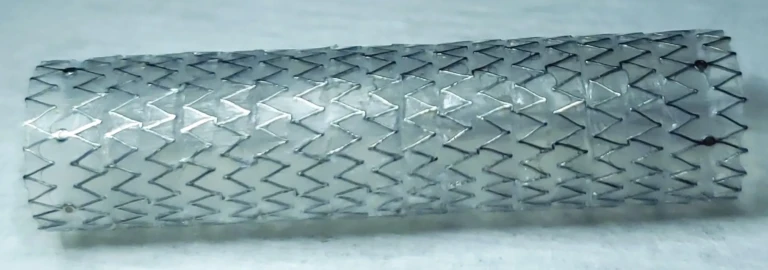
Peytant Solutions, the medical technology company that developed the first and only stent covered with human-sourced amniotic membrane (AM) to receive FDA De Novo granted clearance, today announced the publication of a peer-reviewed study in the Journal of Bronchology and Interventional Pulmonology.
In this study, the AMStent® Tracheobronchial Covered Stent System showed superior results compared to commercially available synthetic polymer-covered stents in a preclinical porcine model.
The study, titled “Amniotic Membrane (AM) Covered Airway Stent Mitigates Airway Injury and Complications: A Comparative In Vivo Study in a Porcine Model”, represents the first in vivo evaluation of amnion-covered airway stents. Conducted by researchers at the M Health Fairview University of Minnesota Medical Center and the Mayo Clinic, the study compared Peytant’s AMStent System, which is covered in human-sourced amniotic membrane (AM), to commercially available polymer-covered stents over a 90-day period.
Key findings from the study include:
- Reduced complications: The AM-covered stents demonstrated lower rates of stent migration, mucostasis, and granulation tissue formation compared to controls.
- Enhanced airway healing: Histological analysis revealed decreased airway injury and evidence of re-epithelialization with cilia with the AM-covered stents—features absent in the control stents.
- Potential for improved biocompatibility: The results suggest that AM coverings may enhance biocompatibility and integration while mitigating adverse airway responses, as compared to synthetic polymer-covered stents.
“Results from this preclinical, non-diseased model suggest that the AMStent may help mitigate airway complications while promoting tissue healing,” said Roy Joseph Cho, MD, MHA, associate professor of interventional pulmonology at the University of Minnesota and lead investigator. “These findings warrant further investigation in clinical settings.”
The AMStent System is designed for use in patients with malignant pulmonary obstructions (POs), a common complication of lung cancer and metastatic tumors. Pulmonary obstructions block airflow in the central airways, trachea, or bronchi. In fact, 25% to 30% of patients with lung cancer or cancers that metastasize to the lung can have POs. Management involves airway stenting to improve airflow and relieve symptoms. If untreated, POs can lead to life-threatening respiratory failure. By leveraging the properties of amniotic membrane, the AMStent aims to reduce devastating stent-related complications while supporting the natural healing of airway tissue.
“This publication validates Peytant’s commitment to innovation and improving patient outcomes,” said John Schorgl, founder and CEO of Peytant. “We look forward to advancing a safer, more effective airway stenting solution for patients.”