Hospitals and care facilities have rigorous handwashing protocols, glove changes, and sanitation procedures in place. Yet, one of the most frequently handled items in healthcare still moves largely unchecked between patient rooms, nursing stations, offices, and common areas: the mobile phone.
Healthcare-associated infections continue to challenge hospitals and long-term care settings. According to the CDC, about 1 in 31 U.S. hospital patients has a healthcare-associated infection on any given day, and about 1 in 43 nursing home residents does as well. In this environment, Swypes sees an urgent need to call attention to what it sees as a major blind spot in modern infection-control: phone hygiene.
Healthcare workers now rely on mobile phones throughout the day to communicate with colleagues, coordinate care, review information, and stay connected across fast-moving clinical environments. But while hands are cleaned repeatedly, personal devices are rarely included in any hygiene routine. In fact, published research also shows healthcare workers’ phones are frequently contaminated. A 2023 meta-analysis found bacterial contamination on 84.5% of devices used by healthcare workers.
“Hand hygiene is routine in healthcare. Device hygiene should be, too,” said Josh Bilow, Founder and CRO of Swypes. “Phones now travel everywhere healthcare happens. They move from patient rooms to nurses’ stations to break areas and back again, yet they’re rarely part of the cleaning routine. That’s the gap we believe needs more attention.”
What’s Living on Healthcare Workers’ Phones
Studies have identified potentially harmful bacteria on healthcare workers’ phones, including drug-resistant organisms associated with healthcare-associated infections. As mobile devices become more embedded in care delivery, the conversation around cleaner environments needs to evolve with how clinicians work in hospitals and beyond. In nursing homes, assisted living communities, and other long-term care settings, staff move continuously between residents, rooms, and shared areas. For older and medically vulnerable populations, overlooked hygiene gaps can carry greater consequences.
“This is not about replacing existing protocols,” Bilow said. “It’s about recognizing that phones are now essential tools in healthcare and giving professionals a quick, practical way to add mobile devices to the existing cleaning protocols.”
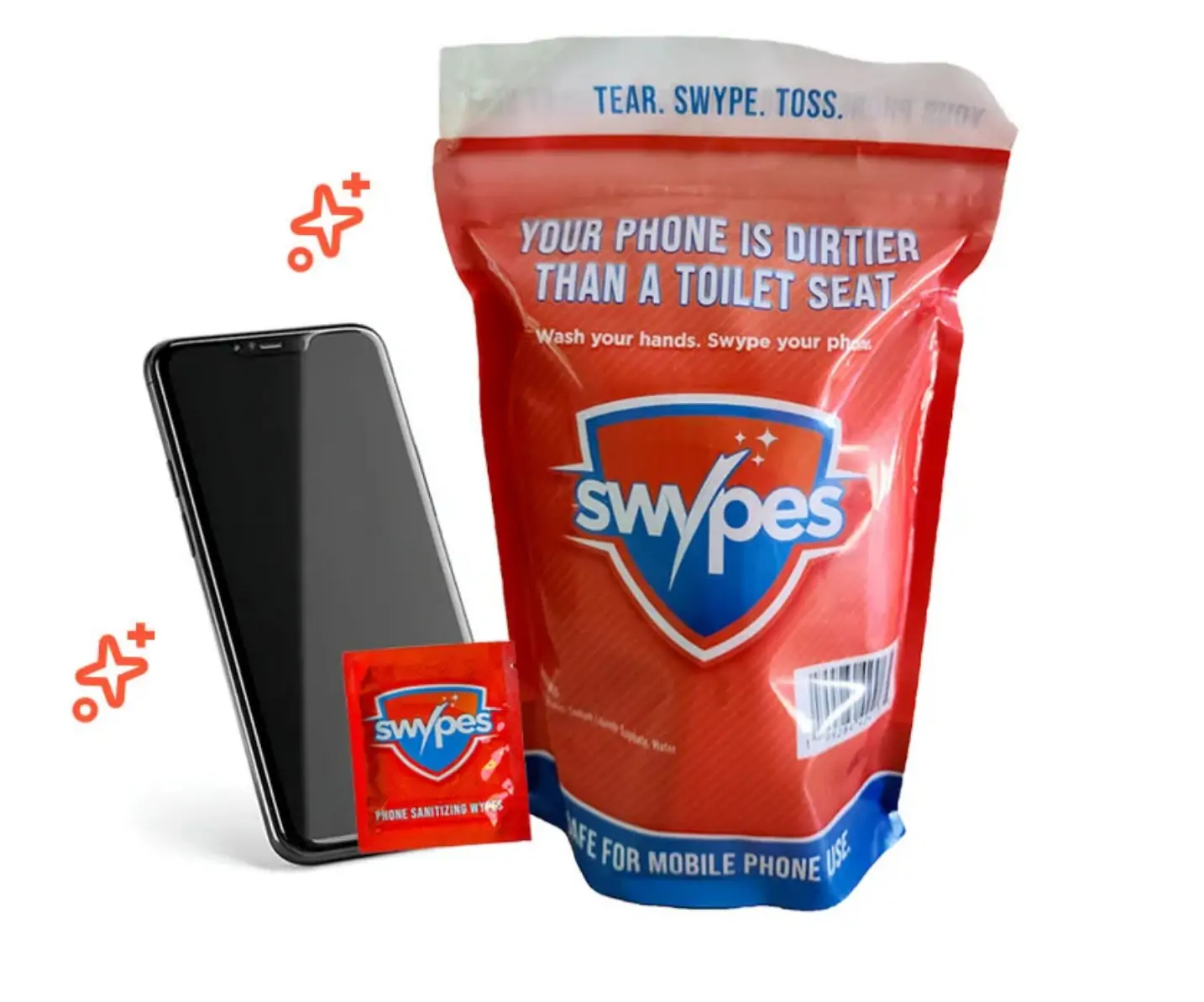
Swypes are individually packaged wipes formulated with 70% isopropyl alcohol and designed for phones and other personal electronics. Created for convenience and portability, they are designed to help remove fingerprints, oils, and everyday buildup without adding extra steps to already demanding workflows.
In clinical environments where speed matters, Swypes positions phone hygiene as a simple habit that can fit naturally between tasks, whether at a nursing station, on a charting desk, in a staff lounge, or during transitions throughout the day. As hospitals, nursing homes, and care teams continue looking for ways to strengthen hygiene awareness, Swypes believes one of the simplest places to start is with the device already in every worker’s hand.