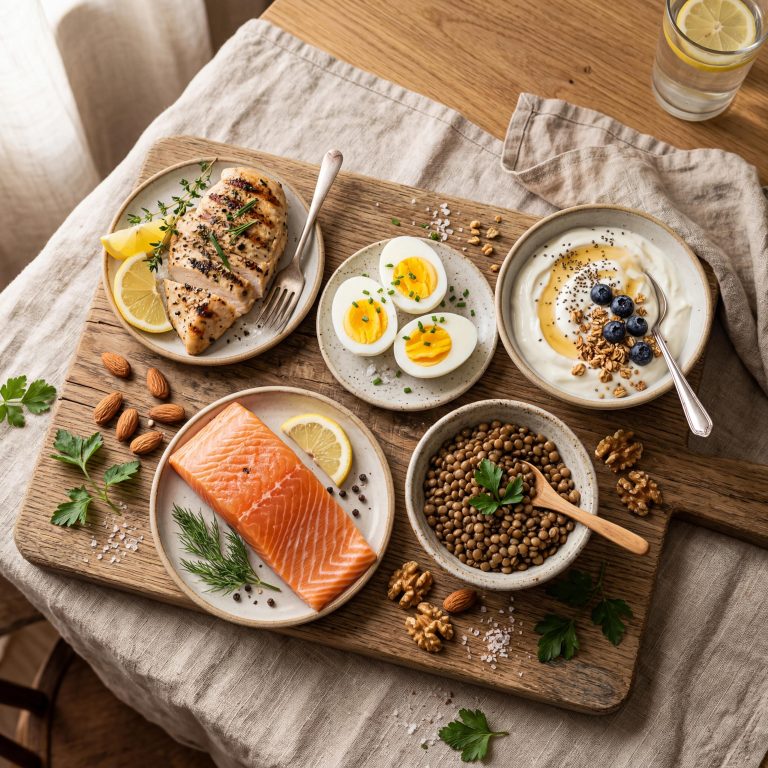
GLP-1 medications have transformed the approach to weight management for many people. Medications such as semaglutide and tirzepatide can reduce appetite, increase feelings of fullness, and make it easier to consume fewer calories. However, eating less creates an important nutritional challenge: How do you make sure the food you do eat provides the nutrition your body needs?
For many people taking GLP-1 medications, protein should be a nutritional priority.
A protein-rich, high-protein diet can help preserve muscle during weight loss, improve satiety, support strength and physical function, and make each meal more nutritionally valuable. Rather than simply focusing on eating fewer calories, people using GLP-1 medications should consider the quality of those calories.
Why Protein Is Important During GLP-1 Weight Loss
Weight loss does not exclusively come from body fat. When someone loses a significant amount of weight, some lean body mass can also be lost.
That makes preserving muscle an important consideration during GLP-1 treatment.
Incorporating a high-protein diet can be a strategic approach for individuals aiming to maximize the benefits of GLP-1 medications.
Adequate dietary protein provides amino acids the body needs to maintain and repair muscle tissue. Protein becomes particularly important when calorie intake is substantially reduced.
Preserving muscle isn’t merely about appearance. Muscle plays an important role in strength, mobility, physical function, healthy aging, and metabolic health.
The goal of successful weight management should therefore be more comprehensive than simply watching the number on the scale decline. Ideally, the focus should be on losing excess body fat while preserving as much lean muscle as possible.
GLP-1 Medications Can Dramatically Reduce Appetite
One reason protein deserves extra attention is that GLP-1 medications can make people feel full after eating considerably smaller amounts of food.
That is part of what makes these medications effective for weight management. But reduced appetite can also mean people unintentionally consume inadequate amounts of protein and other important nutrients.
Someone who previously ate three substantial meals may suddenly find that a small portion is enough to feel satisfied.
This makes food selection increasingly important.
Instead of filling up first on foods that provide relatively little nutritional value, consider making lean protein the foundation of a meal, followed by vegetables, fruit, whole grains, healthy fats, and other nutrient-dense foods as tolerated.
Protein Can Help You Feel Full Longer
Protein is also highly satiating, making it particularly well suited to a GLP-1 nutrition plan.
Meals containing protein can help promote fullness and satisfaction. When combined with the appetite-regulating effects of GLP-1 medications, protein-rich foods may make it easier to follow a balanced eating pattern without constantly feeling hungry.
Good protein sources include:
- Eggs, chicken, turkey and lean meats
- Fish and seafood
- Greek yogurt and cottage cheese
- Beans, lentils and legumes
- Tofu, tempeh and other soy foods
- Milk and high-protein dairy products
- Nuts and seeds
- Protein shakes or supplements when appropriate
Whole foods should generally form the foundation of a healthy diet, but protein drinks can be useful when reduced appetite makes consuming enough food difficult.
How Much Protein Should You Eat on a GLP-1?
There isn’t one ideal protein target for every person taking a GLP-1 medication.
Protein requirements can vary considerably depending on body weight, age, activity level, overall calorie intake, weight-loss rate, health conditions, kidney function, and exercise routine.
Rather than automatically adopting an extremely high-protein diet, speak with a physician or registered dietitian about an appropriate daily target.
Another practical strategy is to spread protein throughout the day instead of trying to consume a large amount at dinner.
For example, include a meaningful protein source at breakfast, lunch, dinner, and, when needed, snacks.
Protein and Strength Training Are a Powerful Combination
Increasing protein intake is only part of the muscle-preservation strategy.
Resistance or strength training is equally important.
Weight training provides a stimulus telling the body that muscle is still needed, while adequate protein supplies the nutritional building blocks required to maintain and repair that muscle.
Strength training doesn’t necessarily mean becoming a bodybuilder or spending hours in a gym. Depending on an individual’s health and fitness level, it can include resistance bands, weight machines, free weights, body-weight exercises, or professionally supervised strength programs.
Adults beginning a new exercise program—particularly those with medical conditions or significant physical limitations—should discuss appropriate exercise with a healthcare professional.
Don’t Forget Fiber and Hydration
A high-protein diet should not become a protein-only diet.
People taking GLP-1 medications also need adequate fluids, fiber, vitamins, minerals, and healthy fats.
Hydration and fiber deserve particular attention because gastrointestinal side effects such as constipation can occur with GLP-1 medications.
Vegetables, fruits, legumes, and whole grains can provide valuable fiber, while drinking adequate fluids helps support normal hydration and digestive function.
The objective should be a balanced, nutrient-dense diet with sufficient protein, rather than eliminating entire food groups.
Quality Matters as Much as Quantity
Getting more protein doesn’t mean eating bacon, sausage, cheeseburgers, and heavily processed meat at every meal.
Prioritize nutritious protein sources such as fish, poultry, eggs, low-fat or moderate-fat dairy products, beans, lentils, tofu, and lean meats.
People following plant-based diets can also obtain substantial amounts of protein by combining foods such as beans, lentils, soy products, nuts, seeds, and whole grains.
A Better Way to Think About GLP-1 Nutrition
GLP-1 medications can make eating less easier. The next challenge is making every bite count.
Protein-rich, nutrient-dense meals combined with appropriate strength training can help people focus not simply on losing pounds, but on improving body composition and maintaining strength throughout the weight-loss process.
The best GLP-1 diet isn’t necessarily the diet containing the fewest calories. It’s an eating pattern that supports sustainable weight loss while providing the protein, fiber, fluids, vitamins, minerals, and other nutrients the body needs.
For many people, that means putting protein at the center of the plate. Delivery food service can be of great help.
Before substantially increasing protein intake, people taking GLP-1 medications should discuss their nutritional needs with their healthcare provider or registered dietitian, particularly if they have kidney disease, diabetes, or another medical condition requiring dietary management.