
The diagnostic industry is entering a new phase as laboratories face rising pressure from limited tissue, sequencing demand, and the operational realities of digital adoption. AI has advanced to a point where imaging tools are becoming practical components of routine workflows, and health systems are moving toward technologies that reduce variability, conserve material, and deliver consistent results without major infrastructure changes.
Sequencing volumes continue to increase across oncology and research programs. Limited material is often divided across multiple modalities, with each conventional stain consuming tissue that cannot be replaced once used. When serial sections differ from the material used for molecular analysis, impurities and shifts in morphology can lead to inaccurate estimates of tumor content, reduced purity, and the risk of erroneous sequencing results. These errors may prevent patients from being properly matched to targeted therapies. As a result, tissue efficient and non-destructive evaluation methods have become increasingly important for laboratories seeking reliable molecular performance.
Digital pathology is gaining ground as laboratories adopt brightfield whole slide imaging systems, image-management systems, and AI quantification and prognostic tools. The shift remains uneven across institutions, but the trend is clear: teams want imaging workflows that align with existing equipment and support accuracy in sample selection. Virtual staining is emerging as a tool that meets these goals. Advances in deep learning now allow the generation of high fidelity virtual H&E images directly from unstained brightfield slides, providing the morphological clarity needed for evaluation without sacrificing any tissue.
Pictor Labs has developed a portfolio of virtual staining technologies designed to conserve tissue while delivering high quality morphological information. Earlier products, including DeepStain™ and ReStain, demonstrated the ability to generate multiple virtual stains from a single tissue section and supported research programs that require maximum preservation of limited material. ClearStain extends these capabilities into sequencing workflows by producing high-fidelity virtual H&E images from the same tissue section that will undergo molecular analysis. This approach brings the benefits of tissue preservation and accuracy directly into environments where both are top priority.
Health systems are now looking for ways to connect morphology and molecular testing more effectively as sequencing becomes more central to clinical decision-making. Many diagnostic workflows rely on an H&E-stained serial section to guide macrodissection, and differences between that section and the slide used for sequencing can cause tumor purity to fall below required thresholds. Digital tools that provide clear visualization of the exact tissue to be sequenced can reduce this gap and support more accurate sample selection within established laboratory practices.
ClearStain™ was developed in response to these needs. The product produces virtual H&E images directly from unstained slides, giving laboratories a view of the same tissue that will undergo sequencing. Evaluation across tissue regions showed virtual-to-chemical visual alignment in 99–100% of areas reviewed, supporting reliable identification of tumor boundaries and high-value regions for dissection. ClearStain works with most commercial brightfield whole slide imaging systems and integrates into existing digital environments, which helps laboratories adopt tissue efficient workflows without significant infrastructure changes.
As sequencing becomes central to treatment planning, molecular laboratories require clear and consistent guidance from pathology. Digital images that correspond exactly to the tissue being processed help reduce ambiguity during dissection and improve predictability in sample preparation. These improvements help decrease the frequency of failed runs and insufficient material, strengthening the reliability of results that oncologists depend on for timely therapeutic decisions. Imaging tools that support consistent tissue selection contribute directly to these goals.
Digital review practices are becoming increasingly important as institutions develop audit pathways, training programs, and multi site standardization efforts. Virtual staining supports these initiatives by enabling reproducible visual evaluation of the tissue used for sequencing. The ability to link morphology directly to molecular output enhances internal oversight and supports research studies that rely on paired image and genomic data.
The broader industry trend points toward convergence between histology, imaging, and sequencing. Tools that preserve tissue, improve accuracy, and integrate into digital workflows are gaining momentum. Virtual staining plays a role in this ecosystem by reducing the need for additional serial sections and supporting a direct line between morphological evaluation and molecular testing.
Laboratories continue to face resource constraints. Staff shortages, variability in manual processes, and rising test complexity create operational strain. Systems that reinforce workflow reliability and reduce rework are becoming essential. AI-driven imaging tools offer support in these areas by automating aspects of the review process and providing consistent outputs that align with established procedures.
As the industry continues to adopt digital pathology and sequencing-driven care expands, demand will grow for tissue efficient imaging tools that strengthen the link between morphology and molecular results. Laboratories will require systems that reduce variability and support the operational needs of high-volume environments. Virtual staining technologies are positioned to support this demand by providing digital views that guide both clinical and research decisions.
The next stage of development involves scaling digital adoption, supporting diverse hardware environments, and expanding virtual staining applications across clinical and research settings. Workflows that connect image-based review with molecular output will continue to shape how laboratories manage both tissue and data.
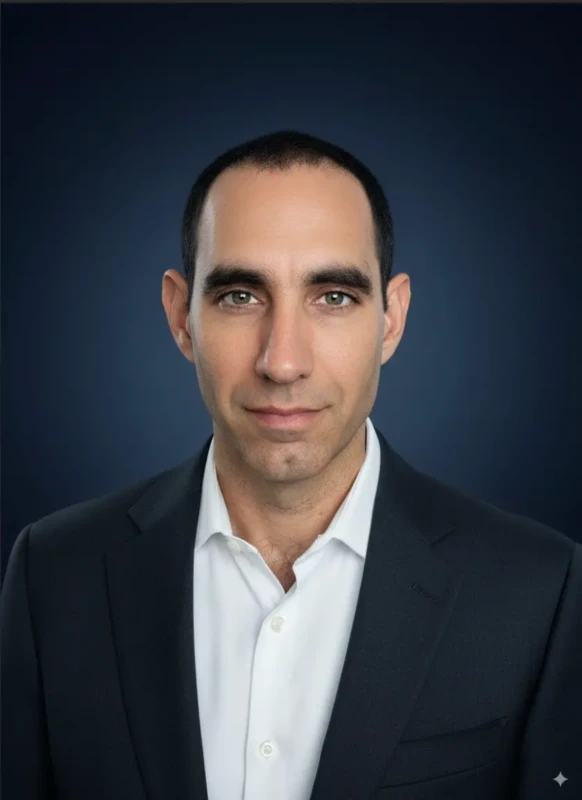
Editor’s Note:Yair Rivenson, PhD, is the CEO and Co-Founder of Pictor Labs. He has lead Pictor’s R&D efforts, engineering and business operations, and recruitment strategy since it broke ground in October 2020. Dr. Rivenson has lead the efforts to transform the core virtual staining intellectual property to a working prototype and then to a commercialized product.
Prior to taking an active role in Pictor Labs, Dr. Rivenson served as a full-time adjunct and research professor at the University of California, Los Angeles, Department of Electrical and Computer Engineering. There he developed the core technologies that would become Pictor’s foundation.
Dr. Rivenson’s IP portfolio includes 10 pending patents, over 65 co-authored journal publications and more than 110 peer-reviewed conference presentations.