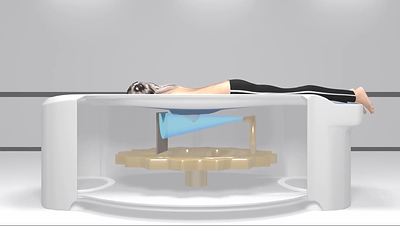

One client came to us with a practical challenge: prepare more device specialists while making the most of limited hands-on training time. Learners needed to arrive familiar with routineworkflows so their time with experts could focus on the skills that required direct practice.
That challenge helps explain the connection between clinical education and medical device adoption. A company can secure regulatory clearance, build a strong evidence base and place a device in the right account. But the people expected to use it still have to understand where it fits, recognize the relevant clinical cues and use it appropriately.
Training does not determine adoption by itself. Purchasing decisions, reimbursement, evidence, workflow fit and organizational support all matter. Education affects a different part of the equation: whether the people expected to use a technology are prepared to make it part of their practice.
Adoption depends on what people can do
Many training programs still emphasize exposure and completion. Learners attend a session, watch a demonstration or finish an online module. Those activities document participation, but they do not show whether someone can perform the task later, under realistic conditions and without prompting.
For a medical device company, that gap can appear as slow onboarding, repeated questions, dependence on field support or reluctance to use the product beyond an initial case. Each symptom has its own causes, but some may reflect a gap between receiving information and being able to use it.
When I talk with clients, I use a simple progression: SEE, TRY and DO. First, learners observe expert performance. Then they practice with guidance and feedback. Finally, they demonstrate what they can do without prompts. It gives us a practical way to ask whether the training is preparing someone for the task.
Seeing creates the mental model
Before learners can perform a procedure or use a device, they need a clear picture of what is happening. A product demonstration can show the required steps, but the strongest demonstrations also reveal the reasoning behind them. The expert explains what to look for, why a decision matters, how anatomy or patient conditions affect the workflow and what a correct result should look like.
This is where medical animation, video, three-dimensional visualization and expert narration can be especially useful. They can make hidden anatomy visible, slow down a rapid action, isolate a mechanism or show a perspective that would be difficult to observe in a live setting. The goal is a mental model the learner can retrieve later.
Trying turns knowledge into decisions
The next step is guided practice. Learners need a chance to make choices, manipulate the relevant tools and see the consequences of their actions before independent use. Depending on the objective, that practice might occur in an interactive module, a physical or virtual simulator, an extended reality environment or a structured session with an instructor.
The important feature is active participation. The learner should have to identify the next step, respond to a cue or recover from a common error. Immediate, specific feedback helps correct misunderstandings before they become habits. Repetition then allows the learner to refine the sequence and devote less mental effort to basic mechanics.
Research supports this emphasis on deliberate practice. A 2011 meta-analysis in Academic Medicine found that simulation paired with deliberate practice outperformed traditional clinical education for the specific skill-acquisition outcomes studied. That supports purposeful practice. It does not establish that any particular technology will improve device adoption.
Doing reveals readiness
The final stage asks the learner to perform without prompts in a realistic context. This is where we can begin to evaluate readiness for a defined task instead of assuming it from attendance or quiz scores.
The assessment should reflect the behavior the job requires. Can the learner prepare the device, recognize the relevant cues and follow the critical sequence without prompts? Can they explain important decisions and respond to a foreseeable complication? The questions should match the device, user and risk.
We also need to be clear about what an assessment can establish. Success in a virtual environment may demonstrate sequence or decision-making skills. Depending on the task, readiness for patient care may still require hands-on assessment with the actual device andsupervised clinical experience. Confidence, simulated performance and clinical readiness are related, but they are not interchangeable.
Independent performance also gives the manufacturer better information. Repeated difficulty at the same point may call for clearer instruction or additional practice. It may also reveal a usability issue or support need for another team to investigate. Training data can inform those conversations, while formal human factors work remains a separate responsibility.
Design training around clinical work
Clinical education is most useful when it is designed alongside the product experience, with enough time before launch to test and improve it. Education teams need to understand the intended users, the setting, the existing workflow and the critical actions. They also need input from clinical, product, regulatory, human factors and commercial colleagues.
That collaboration helps distinguish what learners must know from what they must be able to do.
It also prevents a common problem: building one broad program for audiences with different responsibilities. A surgeon, nurse, technician and sales representative may need a shared understanding of the product, but they do not need identical practice or assessment.
Training should also acknowledge the pressures of the clinical environment. Time is limited, access to experts varies and a single event may occur weeks before the learner uses the device.
A program should therefore provide support at the right point, from foundational education before a session to practice before first use and concise reinforcement afterward. Teams also need a way to prepare new staff and keep education current as the product changes.
Match the medium to the learning need
When I explain SEE, TRY and DO, I always add a caveat: we should not choose VR for VR’s sake. If a simple animation gets the point across, that may be the right answer. In other cases, spatial understanding or complex decisions justify an immersive experience. The choice should depend on what the learner needs to practice and how reliably the organization can deliver it.
Make more room for learning in person
For the client mentioned earlier, we focused on preparing learners for the parts of the work that required direct experience and expert guidance.
We built simulations and supporting materials that learners could use before and after their on-site sessions. They could learn routine workflows and become familiar with the equipment in advance, then return to the digital tools afterward to reinforce what they had learned.
A virtual version of the equipment also let them practice operating the device and explore different actions at their own pace, without needing access to the real thing.
The client could then train more people while reserving on-site time for the skills that needed direct practice and expert feedback. The digital work didn’t replace hands-on training. It made that time more focused and productive.
Measure behavior beyond completion
Completion still has administrative value, but it tells us little about what someone can do. A stronger evaluation plan examines whether learners retain critical knowledge, improve with 3practice and perform defined tasks independently. It can also track where errors occur and how much prompting is required.
Establish those measures before building the content. If the desired outcome is independent device setup, include an observable setup task. If the goal is retention, assess it again after enough time has passed to test it.
Then connect those measures to adoption and capacity. Can more specialists complete the required training each week? Are users reaching readiness milestones sooner or needing fewer repeat support visits? Are they continuing appropriate use after their initial cases? Establish a baseline and account for other changes that could affect the results.
Give education teams a stronger business case
One frustration I hear repeatedly from training teams is that they believe better education affects the business, but struggle to demonstrate the return on investment. That can become a downward spiral. Small budgets limit what teams can build and measure. Without convincing evidence of impact, the case for more investment gets harder.
Education, commercial and finance teams should agree early on which outcomes they can realistically track. Training capacity, support time and repeat training costs may be easier to connect to an education program than revenue. Better readiness and sustained appropriate use can strengthen the business case, while recognizing that education is one contributor among several. That evidence gives training teams a more useful budget conversation than completion counts alone.
What successful adoption looks like
A device does not become part of clinical practice simply because it is available or because someone attended training. Clinical education supports adoption when it helps people understand where the technology belongs in their work, practice the decisions that matter and demonstrate the skills required to use it.
For a medtech company, the question is whether training helps people use the device appropriately when it matters. If we design around that question and measure what happens afterward, we give clinicians better support and give education teams a stronger case for continued investment.
Reference
McGaghie WC, Issenberg SB, Cohen ER, Barsuk JH, Wayne DB. Does simulation-based medical education with deliberate practice yield better results than traditional clinical education? A meta-analytic comparative review of the evidence. Academic Medicine. 2011;86(6):706-711. PubMed
Editior’s note: Steve Deverall is CEO and co-founder of InfuseMed, a medical education and visualization company with two decades of experience creating learning solutions for health care and life sciences organizations. InfuseMed’s work spans medical animation, software, extended reality, simulation, video and interactive training.